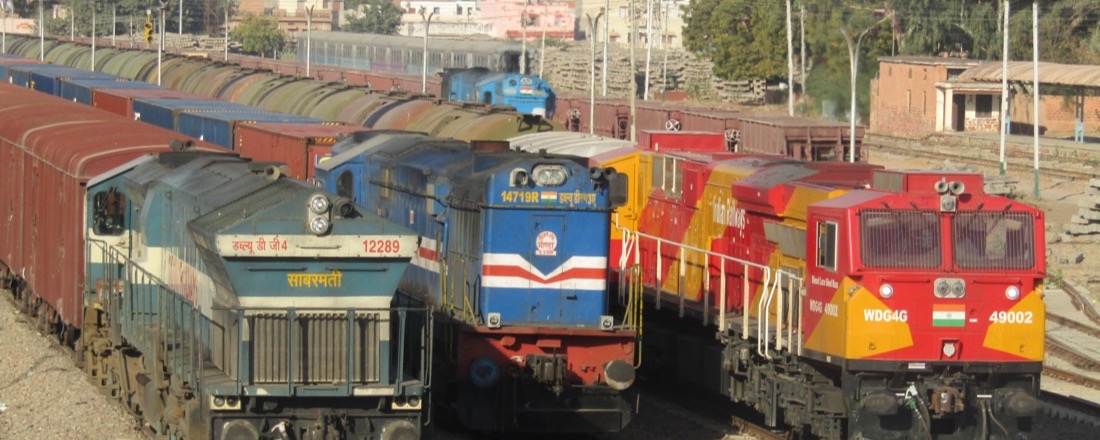
March 2022: Cumulative losses cross ₹62.88 crore. COVID halted the train five times. Frequency is slashed. Occupancy hovers at 40-50%. The Tejas runs on the same route as the Shatabdi — at fares 20-30% higher. Quietly, a 150-train private tender attracts only two bidders — one of them a government subsidiary. The tender is scrapped.
2026: The government revives the plan with revised terms. The question nobody is asking: if the first train lost money, and the private sector showed almost no interest in the next batch — why are we doing this again?
Indian Railways isn't a business. It's an organ of the country. Every day, 23 million people board trains across over 7,000 stations. That's more than the entire population of Sri Lanka — every single day. And 99% of them are poor or middle-income passengers traveling in sleeper and unreserved coaches.
These aren't leisure travelers choosing between airlines and trains. These are migrant workers carrying their lives in cloth bundles. Students traveling from small towns to exam centers. Daily-wage laborers who can afford a ₹200 general ticket but not a ₹2,000 Tejas seat. For them, the railway isn't a service — it's the only way to reach where the work is.
And they already paid for it. Indian Railways receives ₹2.52 lakh crore annually from the Union Budget — money that comes from taxes collected from every Indian, whether they ride a train or not. The entire railway network — 68,000 km of track, 13,000 trains daily, every station, every signal — was built and is maintained with public money.
The Tejas Express was supposed to prove that private operation works. The reality is more complicated.
| Metric | Tejas Express (Lucknow-Delhi) | Context |
|---|---|---|
| Month 1 profit | ₹70 lakh | New train hype, high occupancy |
| 3-year cumulative loss | ₹62.88 crore | Occupancy fell to 40-50% |
| Fare vs Shatabdi | 20-30% higher | Same route, same duration |
| Frequency | Reduced to 3-5 days/week | Was planned for daily |
| Operator | IRCTC (government subsidiary) | Not a private company |
| Infrastructure owner | Indian Railways (government) | Tracks, stations, signals all public |
There's a detail that gets buried in the "first private train" narrative: IRCTC, the operator, is a 62.4% government-owned subsidiary. The train runs on government-owned tracks, uses government-owned locomotives driven by government employees, with security provided by the RPF. The "private" part was ticketing and catering. It was a public-sector company running on public infrastructure.
And here's what the ₹63 crore "loss" actually looks like when you follow the money:
IRCTC pays Indian Railways ~₹14 lakh per day in fixed charges — haulage, coach lease, and custody fees. These are payable regardless of occupancy. COVID halted the train five times between 2020 and 2022. The coaches sat idle in yards. No passengers. No revenue. But IRCTC still paid. Indian Railways collected its fixed charges on trains that weren't running.
The ₹63 crore didn't vanish. It moved from one government entity (IRCTC) to another (Indian Railways). IRCTC's loss reduced its profitability, which reduced dividends to its majority shareholder — the Government of India. The taxpayer bore the cost either way. The only thing the "corporate model" achieved was moving the loss off Indian Railways' balance sheet and onto a subsidiary's.
A small village has one kitchen that feeds everyone — 23 families. Every household puts money into the village fund. That fund built the kitchen, pays for grain, firewood, and the cook.
The village head assigns Ramu to run it. Same kitchen, same stove, same grain — all village property. But the head charges Ramu a fixed fee of ₹500 every day. Rain or drought. Festival or funeral. Even during the months the kitchen is shut because of floods — Ramu still pays.
After three years, Ramu owes ₹63,000. He didn't steal. He didn't waste. The kitchen fed everyone. But the fixed charges ate him alive — especially the months it was shut and he was still paying.
The village head stands up at the panchayat: "Ramu has failed. He owes ₹63,000. The kitchen needs better management."
Next week, a new person takes over. He uses the same kitchen. Same stove. Same grain store. But now a plate costs ₹20 instead of ₹10. The 22 families who can't afford ₹20? They eat last, get less, or go to Ramu — who's still cooking in the back on a smaller chulha, now called "inefficient."
The village built the kitchen. The village pays the new prices. And the profit from a kitchen the village paid for? It doesn't go back into the village fund.
Nobody asks: if the head was collecting ₹500 a day from Ramu regardless — who actually failed?
Then came the next step: a tender for 150 private trains on 109 routes. Private companies would bring their own rolling stock, hire their own crew, and run trains alongside Indian Railways' services. The terms were clear: take the profitable routes, pay a fee to the government.
Only two entities submitted bids — IRCTC (a government subsidiary) and one private infrastructure company. Not a single major private railway operator from India or abroad showed interest.
The risk was too high. Who wants to invest thousands of crores in trains when the government controls the tracks, decides the schedules, and can change policy anytime? The tender was scrapped and re-evaluated in 2021. By 2025, the government revised the plan with softer terms. But the fundamental question remains: if the market itself largely rejected the model, what has changed?
₹29,300 Crore to ₹1,700 Crore. BSNL Was a Warning.To understand what could happen to Indian Railways, you don't need to look at Japan or England. You just need to look at your phone.
In the early 2000s, BSNL was India's largest telecom company. Government-owned, present in every corner of the country, from Kashmir to Kanyakumari. It had cash reserves of ₹29,300 crore. It was not just solvent — it was thriving. Market leader. Growing.
Then came a series of policy decisions that, taken individually, looked routine. Taken together, they form a pattern:
The pattern is clear: give private operators a head start, deny the public company resources to compete, drain its reserves with forced payments, then point to its declining performance as proof that privatization is necessary. And after the public operator is crippled, spend even more public money — ₹1.64 lakh crore — trying to revive it. The cost of the "rescue" exceeded the cost of simply letting BSNL compete on a level field.
Spot the Pattern. Telecom. Railways. Same Steps.| Step | What Happened in Telecom | What's Happening in Railways |
|---|---|---|
| 1. Create competition | Private mobile licenses issued (2000) | Private trains planned on premium routes (revised after 2020 plan failed) |
| 2. Give private a head start | BSNL blocked from mobile for 2 years | Private trains get premium routes that existing trains already serve |
| 3. Drain public operator's resources | Forced ₹18,000 crore spectrum payment | Operating ratio at 98.22% — Railways spends ₹98.22 for every ₹100 earned |
| 4. Handicap with policy | BSNL given expensive spectrum, blocked from 4G auction | Sleeper berths cut 23% on migrant corridors; premium Vande Bharat prioritized |
| 5. Point to failure | "BSNL is inefficient, overstaffed" | "Railways runs at a loss, needs reform" |
| 6. Spend public money on rescue | ₹1.64 lakh crore revival package | ? |
| 7. End result | Private: 92.53%. Public: 7.47%. | ? |
No one is saying the outcome is predetermined. But the playbook — the sequence of steps — is recognizable. And the last time India ran this playbook in a major public infrastructure sector, the public operator went from market leader to irrelevance in 15 years.
Does Everything Have to Be Profitable?This is the question that never gets asked in privatization debates, and it's the most important one.
Indian Railways is funded by taxpayer money. The ₹2.52 lakh crore annual budget comes from taxes paid by 1.4 billion Indians — whether they ride a train or not. This isn't a loan. This isn't borrowed money. It's a shared national investment in infrastructure, like roads, like defense, like public schools.
Every year, Indian Railways provides a subsidy of ₹56,993 crore on passenger fares — effectively offering a 46% discount on every ticket. The operating ratio is 98.22%, meaning Railways spends ₹98.22 for every ₹100 it earns. Critics call this "inefficiency." But consider what it means: the railway system runs at near-cost for 23 million daily passengers, most of whom are poor.
Is that waste? Or is that the whole point?
Think about it this way. Your municipal corporation — MCD, BMC, whichever city you live in — collects garbage, maintains roads, cleans drains, runs streetlights. It runs entirely on taxes. Nobody asks: "Is MCD profitable?" If they do their job efficiently, that IS the success. The "profit" is a clean city, not a number on a balance sheet.
Railways works the same way. The "profit" isn't revenue minus cost. The profit is a student from Gorakhpur reaching an exam center in Delhi. A daily-wage labourer from Bihar reaching a construction site in Mumbai. A family getting home for Diwali. When 23 million people can move across the country for ₹200, they work more, earn more, save more, spend more — and that spending powers the economy of every city they reach. The ₹56,993 crore "subsidy" isn't a loss. It's the fuel for an economic engine that generates many times that in GDP.
Imagine, for a moment, if train travel were free. Students travel to better colleges. Workers reach higher-paying jobs. Families don't choose between a train ticket and a week of groceries. The "cost" on the railway's books would look terrible. But the economic activity it would generate — the wages earned, the businesses supplied, the taxes paid by more productive workers — would dwarf the subsidy.
Now consider what happens when you try to make railways "profitable":
| Step | What Happens | Who Pays |
|---|---|---|
| Infrastructure built | ₹2.52 lakh crore/year from taxes | All citizens (taxpayers) |
| Private operator enters | Uses government tracks, stations, signals | Nobody — infrastructure is free/subsidized |
| Premium fares charged | 20-30% above existing trains | Passengers (who already paid via taxes) |
| Profit generated | Revenue minus operating cost | Goes to private operator |
| Rural/unprofitable routes | Nobody wants them | Government keeps running at a loss |
The citizen pays twice: once through taxes to build and maintain the infrastructure, and again through premium fares to ride on it. The private operator's "profit" comes from extracting additional revenue from infrastructure the public already funded. And the routes nobody wants — the ones serving small-town India, the migrant corridors, the lines to Lalkuan and Chhapra and Katihar — stay with the government, running at a loss.
This is not an abstract concern. It's exactly what happened in British telecom, British railways, and Indian telecom. The profitable parts get taken. The unprofitable parts stay with the public. Then the public sector is called "inefficient" because it's only running the routes nobody else wanted.
Three Countries. Three Models. None Like India's.Every country that has privatized railways learned something. The question is whether India is learning from them or ignoring them.
| Country | Model | Result | Annual Subsidy |
|---|---|---|---|
| UK | Privatized 1993. Split track ownership (Network Rail) from train operations (private franchises) | Failed. Renationalized starting 2024 after 30 years. Fares rose, service declined, subsidies doubled. | £10 billion + £30 billion Network Rail debt |
| Japan | Privatized 1987. Regional monopolies (JR East, JR Central, JR West). Government retained golden share. | Succeeded. Three largest companies receive zero subsidy. Revenue from real estate, retail, hotels — not just fares. | Zero for top 3 operators |
| Switzerland | Public ownership with private efficiency. Government owns but runs commercially. | 50.5% self-funded, rest from public subsidy. Consistently ranked world's best rail system. | ~49.5% of total cost |
| India | Private trains competing on same tracks as government trains. Government owns everything. | Unknown. No country has tried this model. | ₹56,993 crore (46% of fare) |
Japan's railway privatization is the success story everyone cites. But look at the structure: JR East, JR Central, and JR West are regional monopolies. They don't compete with each other on the same tracks. Each company controls its region, and diversifies revenue into real estate, retail, and hotels around stations. JR East's property business generates nearly as much revenue as its train operations.
India's model is the opposite. Private and government trains run on the same tracks, on the same routes, competing for the same passengers. But the government train carries 99% poor passengers at subsidized fares, while the private train charges a premium. This isn't Japan's model — it's cherry-picking the profitable cream and leaving the unprofitable milk with the public.
Why the UK Failed — and the Warning for IndiaThe UK privatized its railways in 1993 with great optimism. Thirty years later, the Labour government began renationalizing them in 2024. What went wrong? The track-and-train split meant nobody had full accountability. Private operators squeezed costs, service quality declined, fares rose faster than inflation, and the government ended up paying twice the pre-privatization subsidy level. Network Rail accumulated £30 billion in debt — all public money.
Transport Secretary Heidi Alexander's verdict in December 2024: "We've had private train-operating companies running services in this country over the last few decades, and it clearly hasn't worked."
The Case for Private Trains
- Tejas offered better service quality — cleaner coaches, better food, punctuality
- Competition drives innovation and accountability
- Government shouldn't run businesses — focus on regulation
- BSNL failed due to internal inefficiency, not just policy — overstaffing, bureaucracy, slow decision-making
The Case Against
- The BSNL playbook is documented and repeatable: starve, declare failure, hand over
- 23M daily passengers — 99% poor — can't afford premium fares
- UK renationalized after 30 years of private failure
- No country has tried India's specific model (competition on same tracks) — it's an untested experiment on the world's 4th largest network
- Profitable routes subsidize rural lines. Cherry-picking breaks the cross-subsidy model
The government's original 2020 plan for 151 private trains was shelved after poor response. A revised version with softer terms is being pursued. The target routes remain the same: premium intercity corridors currently served by Rajdhani, Shatabdi, and Vande Bharat — the profitable routes that cross-subsidize the loss-making rural lines.
Here's what's at stake:
| Current System | What Private Entry Does | Impact |
|---|---|---|
| Freight revenue subsidizes passenger fares (68% of gross receipts from freight) | Private trains don't carry freight | Cross-subsidy model stays intact — for now |
| Profitable intercity routes (Delhi-Mumbai, Delhi-Kolkata) generate surplus | Private trains compete for premium passengers on these exact routes | Government trains lose premium passengers, keep subsidy-dependent ones |
| Sleeper and unreserved classes serve 99% of passengers | Private trains serve only AC/premium classes | Two-tier system: premium for those who can pay, declining service for those who can't |
| Sleeper berths on migrant corridors | Down 23% on key corridors (2009-2022) | Migrant workers face fewer options, higher crowding |
The freight cross-subsidy is the load-bearing wall of Indian Railways' financial structure. Freight generates approximately 68% of gross traffic receipts, and those profits cover the losses from passenger services. But if premium passenger revenue gets siphoned off by private operators, the remaining government trains become even less financially viable — making the "loss-making" narrative a self-fulfilling prophecy.
Plot Twist: You Already Paid. Twice.Here is the arithmetic that doesn't appear in any policy document:
Payment 1: Every Indian pays taxes. A portion goes to the railway budget — ₹2.52 lakh crore this year. Whether you take a train or not, you funded the tracks, the stations, the signals, the bridges, the level crossings, and the salary of every railway employee. This is a social contract: you pay for infrastructure, and the nation gets mobility.
Payment 2: A private operator enters. They use the same tracks you paid for. The same stations. The same signals. They charge you 20-30% more than the government train for the same journey. And they keep the profit.
If that profit were funding better rural connectivity, or new routes, or cheaper fares for the poor — you could argue it's worth it. But the profit goes to the operator. The rural routes stay with the government. The poor stay in unreserved coaches. The only thing that changed is that someone is now making money on infrastructure you already built.
The Question Nobody Asks
Does railway infrastructure need to be profitable? Roads aren't profitable. The army isn't profitable. Public schools aren't profitable. As long as the government isn't going into unsustainable debt to fund railways — and India's railway budget is funded from tax revenue, not foreign borrowing — a system that serves 23 million people daily at near-cost isn't "failing." It's doing exactly what public infrastructure is supposed to do.
The global evidence is clear: every major economy subsidizes its railways. China spends $130 billion (see how India's investment pledges compare to reality). Europe spends €73 billion. Even Japan, the poster child of railway privatization, built its entire high-speed rail network with government funding before privatizing the operations. Switzerland, consistently ranked the world's best rail system, is 49.5% publicly subsidized.
The idea that railways must "pay for themselves" is not supported by any major economy's practice. It is an ideological position, not an economic one.
What the evidence does show is that how you privatize matters more than whether you privatize. Japan gave private operators regional monopolies and the freedom to diversify into real estate and retail. The UK split track and operations, creating a system nobody was accountable for. India is trying something no country has attempted: competition between private and public operators on the same government-owned tracks.
The risk isn't privatization itself. It's the specific model: one where the public operator keeps the unprofitable burden, the private operator takes the profitable cream, and the taxpayer who funded everything gets charged twice for the privilege.
The Bottom Line
India's railway privatization experiment is being conducted without a global precedent. The one domestic precedent we do have — telecom — saw the public operator go from market leader to 7.47% market share through a documented sequence of policy handicaps. The Tejas Express, the model case for private trains, lost ₹63 crore over three years (COVID played a major role). The 150-train private tender attracted only two bidders — one a government subsidiary — and was scrapped.
None of this means privatization is inherently wrong. Japan proves it can work — under very different conditions. But it means the current model deserves scrutiny, not faith. Twenty-three million people ride India's trains every day. They already paid for them. The least they deserve is an honest answer to the question: who is this actually for?